
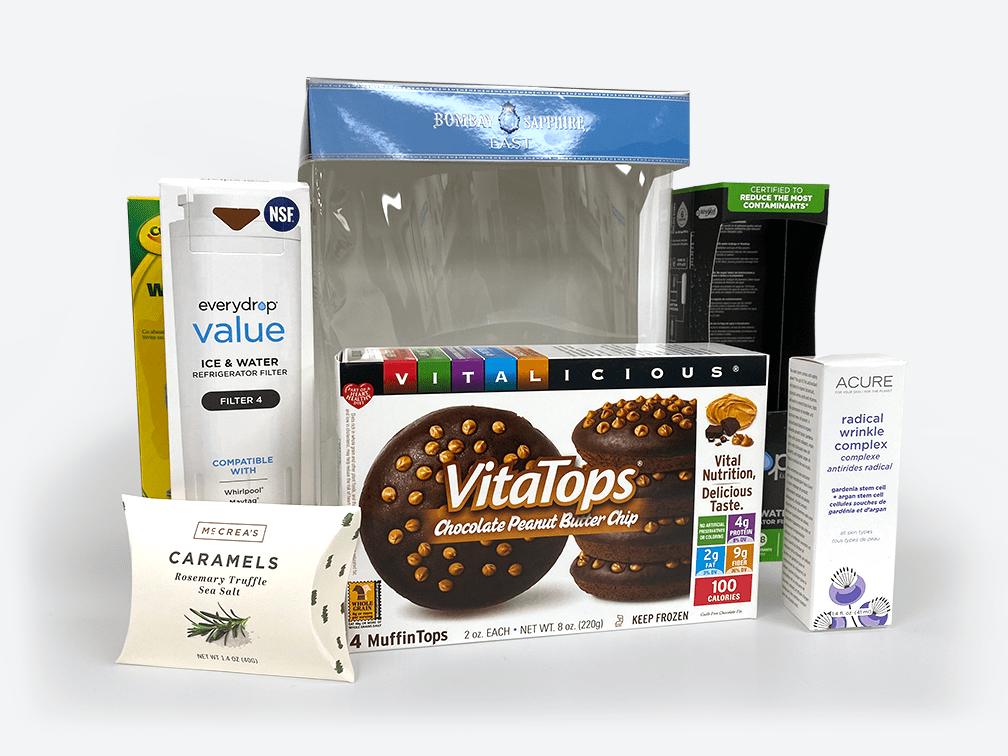
Solutions for every business need.


From Concept to Door Steps, we can manage your print projects every step of the way!
TigerPress is a full-service commercial and custom packaging printer. We serve the needs of small and large businesses alike. From graphic design, print, and production all the way to delivery and distribution of your products.
We are a true one-stop-shop that can help bring your ideas to life.
Some of our services.
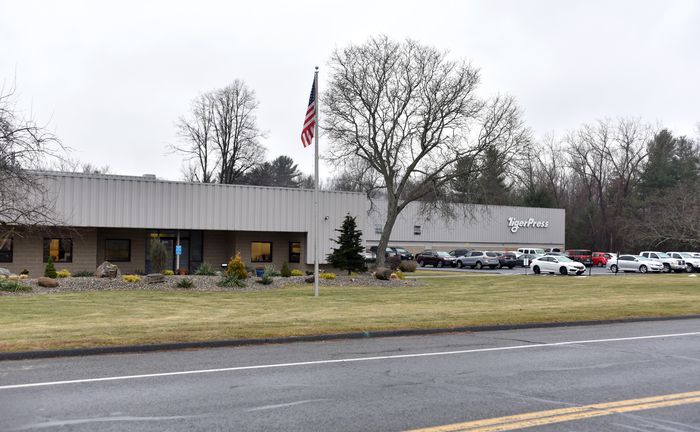
Why TigerPress?
Custom Product Packaging
TigerPress is a family-owned and operated business and prides itself in superb customer service, clear transparent communication, loyalty to our customers, and high-quality products. Our amazing staff is carefully chosen and trained to provide an agreeable experience to all our customers.
At TigerPress, we’re not just another printing company. We’re dedicated professionals who are passionate about providing top-tier commercial printing, digital printing, and custom packaging printing services to businesses of all sizes. We take pride in our ability to transform your ideas into tangible products that resonate with your customers.
Our custom product packaging is more than just a box or bag—it’s a powerful marketing tool. We believe that every package should tell a story: your brand’s story.
Reach out today to work with us and we will make sure you are happy with the result. Be at ease when dealing with us and let us take care of the details and meet your deadline.
FAQ
We make it simple and easy for you with our online estimate request form. Otherwise, the best way to ensure that we get all the information necessary to do an accurate quote is to speak with one of our sales representatives
Every job is different. Some jobs can be produced in minutes while some may take several weeks to complete. Let us know when you need your job completed and we will let you know if it can be done. We go to great lengths to meet even your most demanding timelines.
The Portable Document Format (PDF) is generally the preferred file format for submitting a document for printing as it works with virtually all professional printing and digital output devices. By design, a PDF file incorporates the information needed to maintain document consistency from system to system. Most other file formats such as Adobe InDesign, Illustrator and Microsoft Word can easily be converted to PDF format.
In the digital age of printing, it means that an image file submitted for printing is ready to be transferred to the printing plates without any alterations. A PDF file, which requires no revisions, is a “camera ready” format.
A proof is a one-off copy of your printed document used for visual inspection to ensure that the layout and colors of your document are exactly how they are intended to be. A proof is made prior to sending the document to the press for final printing.
Please take your time and review the proof carefully, as this is your final opportunity to catch errors, make color corrections, and other revisions.
Uncoated stock paper has a natural paper finish, and no coating. Uncoated stock is used when you are looking for a natural touch and feel. Coated stock, by contrast, has a smooth glossy or dull finish that works well for reproducing sharp text and vivid colors.
Pantone colors refer to the Pantone Matching System (PMS), a color matching system used by the printing industry whereby printing colors are identified by a unique name or number (as opposed to just a visual reference). This helps make sure that colors turn out the same from system to system, and print run to print run. 4-color process printing is an imitation of solid colors, which gives the visual impression of the solid colors. They are close to solid colors, but are not exact and vary slightly from print run to print run.